

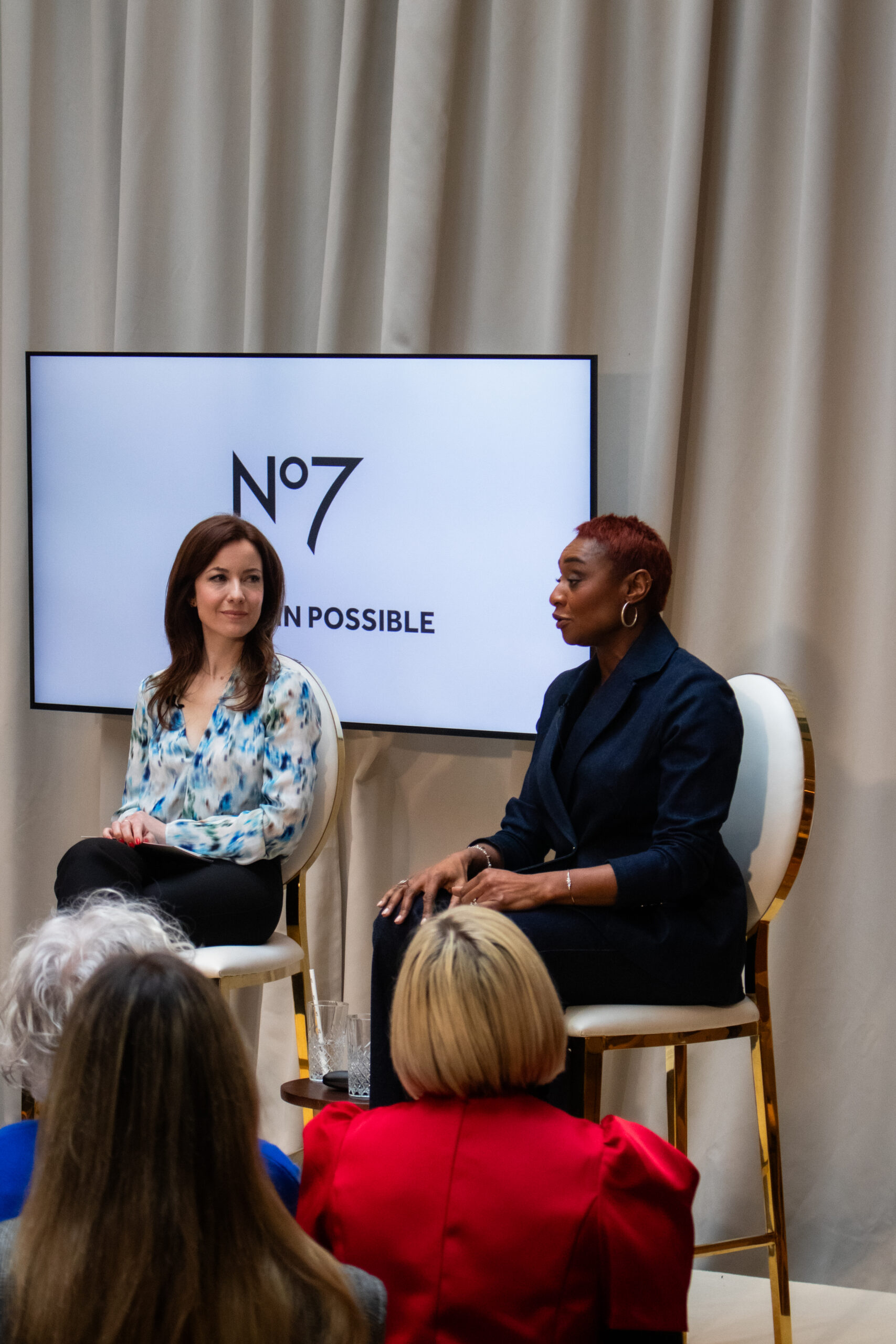
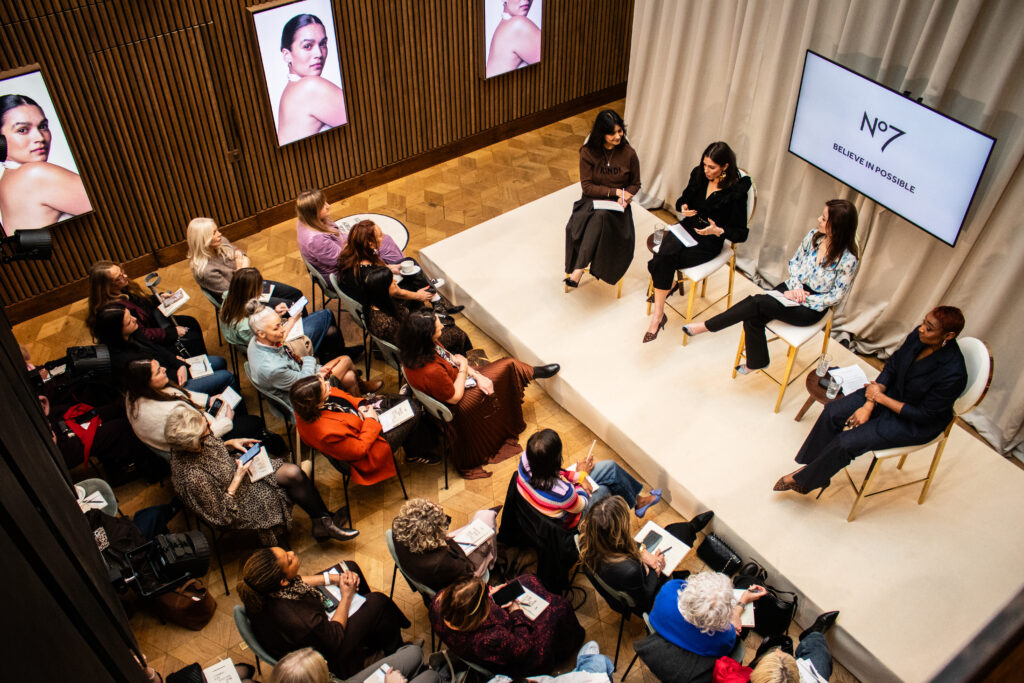
Recently, I was invited to speak at No7’s product launch at BAFTA as part of their “Forgotten Areas” campaign, a theme that explored the parts of ourselves we unintentionally neglect as life evolves.
The event was built around three ideas: our sense of self, our sense of exploration, and our sense of connection. I was invited to speak about connection and more specifically, about friendship, something that has quietly become central to my work over the past few years through building The Merit Club.
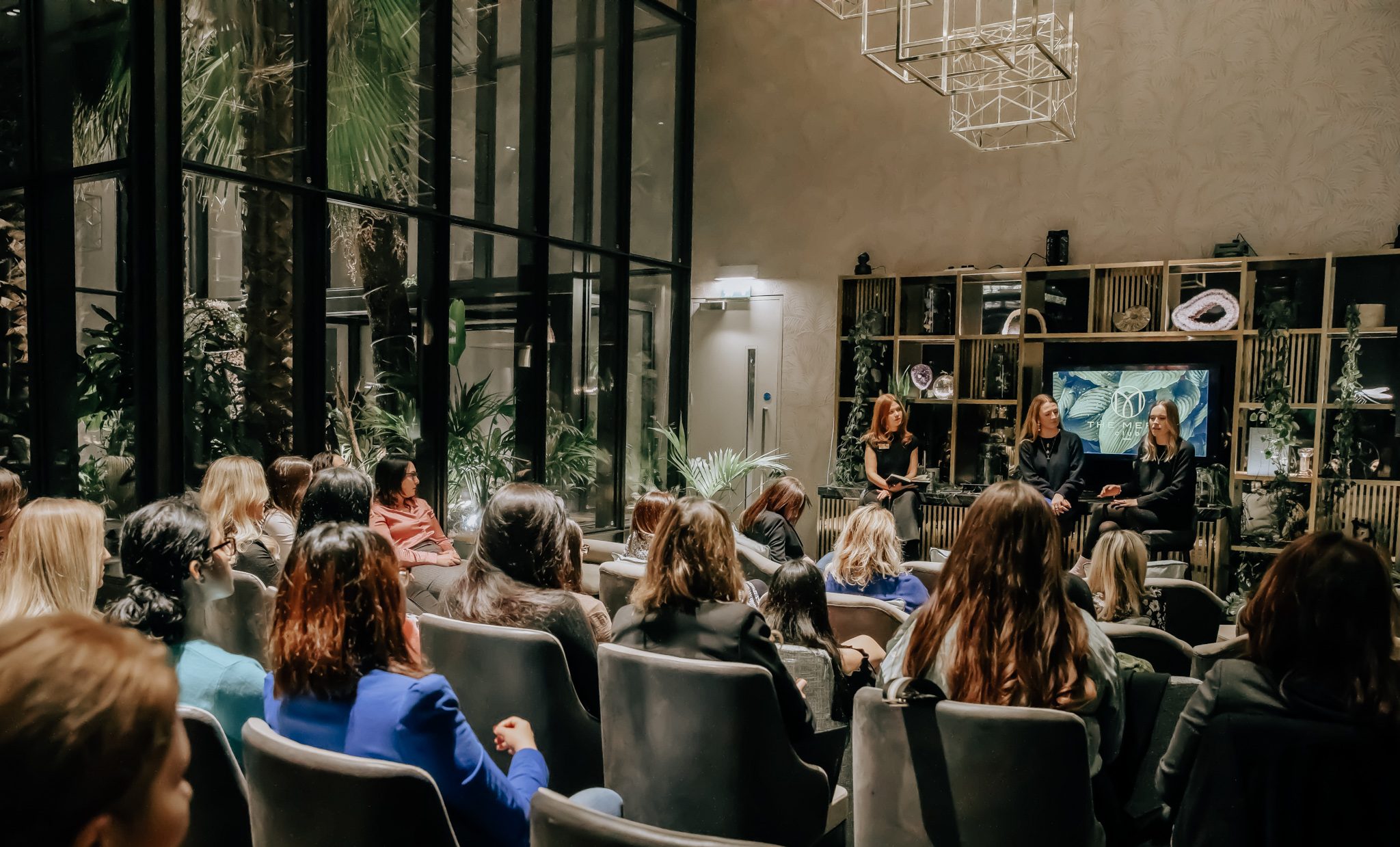
It felt meaningful not just because of the scale of the brand or the setting, but because of the conversation itself. Sitting alongside Olympian Michelle Griffith-Robinson and psychologist Anna Mathur, I found myself reflecting on how rarely friendship is discussed with the seriousness it deserves. We speak openly about confidence, ambition, resilience, productivity – but friendship often sits in the background, as though it is a pleasant addition rather than something structurally important to our wellbeing.
One piece of research shared during the event stayed with me long after I left the room: 55% of women say they want to surround themselves with more like-minded women. And yet “connecting with friends and community” was identified as one of the most frequently forgotten areas in women’s lives.
There is something quietly confronting about that contradiction.
We say we value connection.
We feel the absence of it when it weakens.
But we rarely design our lives to protect it.
As we move further into adulthood, proximity no longer does the work for us. We don’t see the same people every day in classrooms or shared houses or early-career chaos. Our calendars become full in a different way. Responsibilities grow. Energy becomes finite. And so friendship, unless consciously anchored, drifts into the margins.
On the panel, I spoke about something I see repeatedly within our community: friendships rarely disappear because we stop caring. They fade because we stop structuring them.
When connection lives in the leftover space of our calendar – “when things calm down,” “after this busy period,” “next month when work eases” – it slowly loses priority without us even noticing.
The women who maintain strong, lasting friendships don’t necessarily have more time. They have more intention. They attach their relationships to rhythm – a monthly dinner, a weekly class, a recurring walk, a standing book club. The consistency removes the friction.
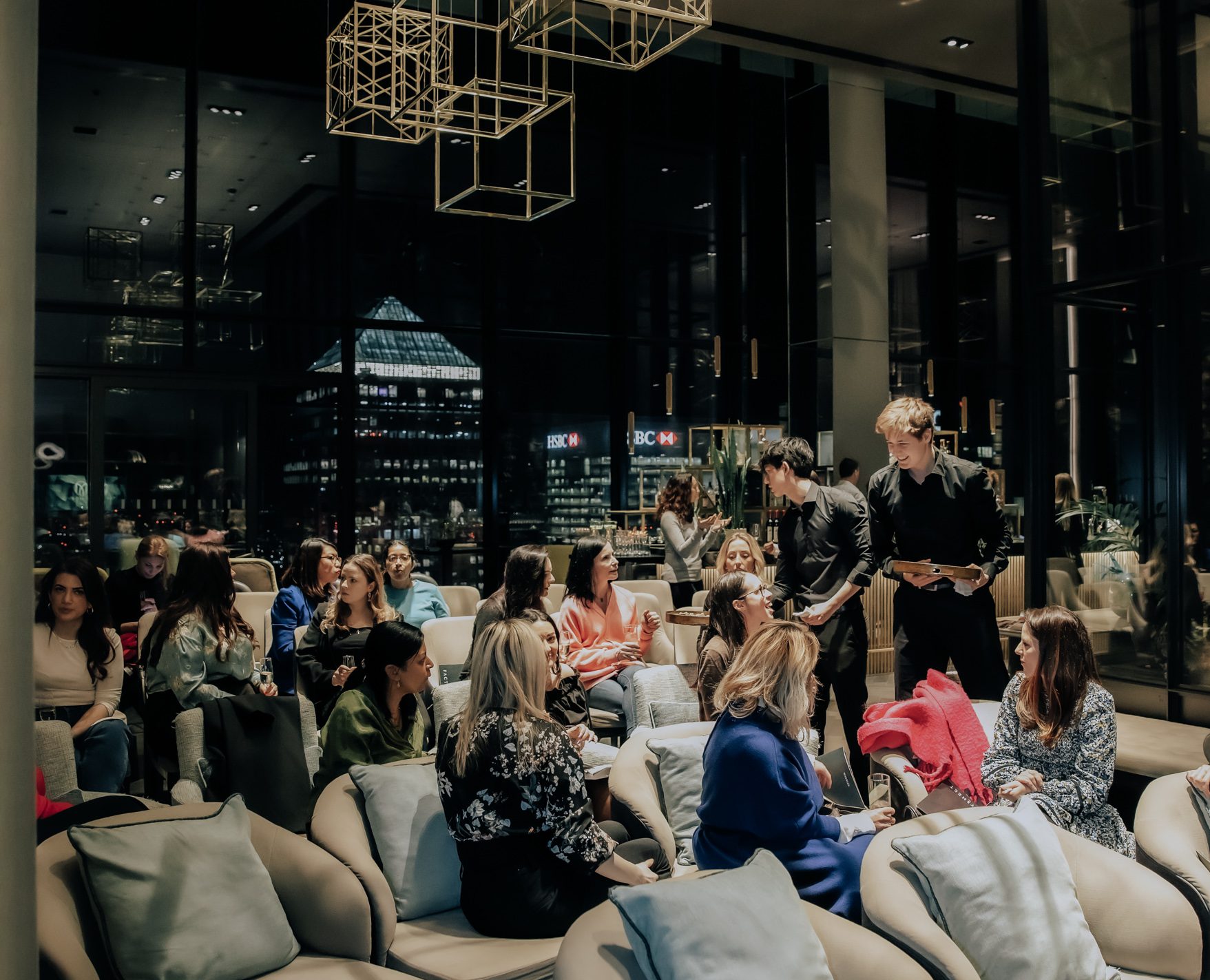
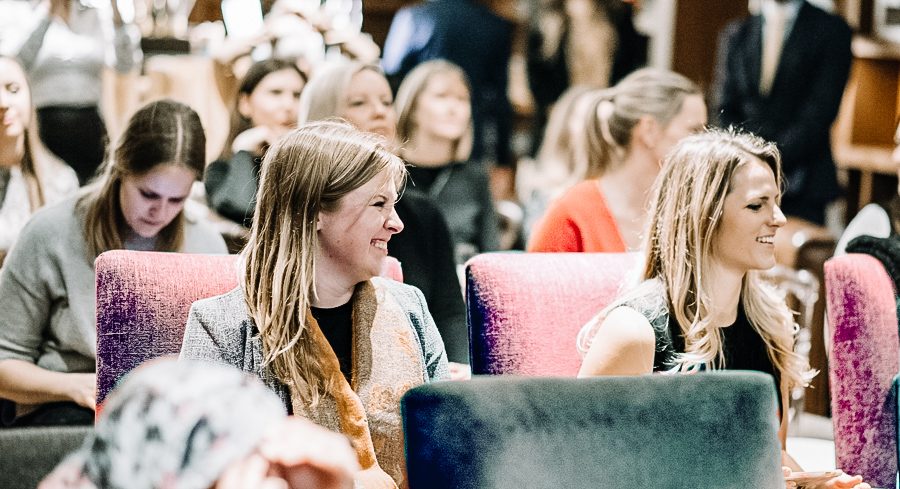
It was powerful to witness a room full of women discussing identity shifts, loneliness, reinvention, and confidence – and to see how often connection sat quietly underneath all of it. Not as a decorative extra, but as something foundational.
What this experience reminded me – and what I want to remind you – is that friendship isn’t an extra or a nice-to-have. It is an integral part of our happiness.
And perhaps the real question isn’t whether we value connection.
It’s whether we are willing to design our lives in a way that protects it.
I’m incredibly proud that The Merit Club exists within this wider cultural conversation, and grateful to No7 for creating space for it. The more I step into speaking about this topic, the more I realise how necessary it feels.


Responses